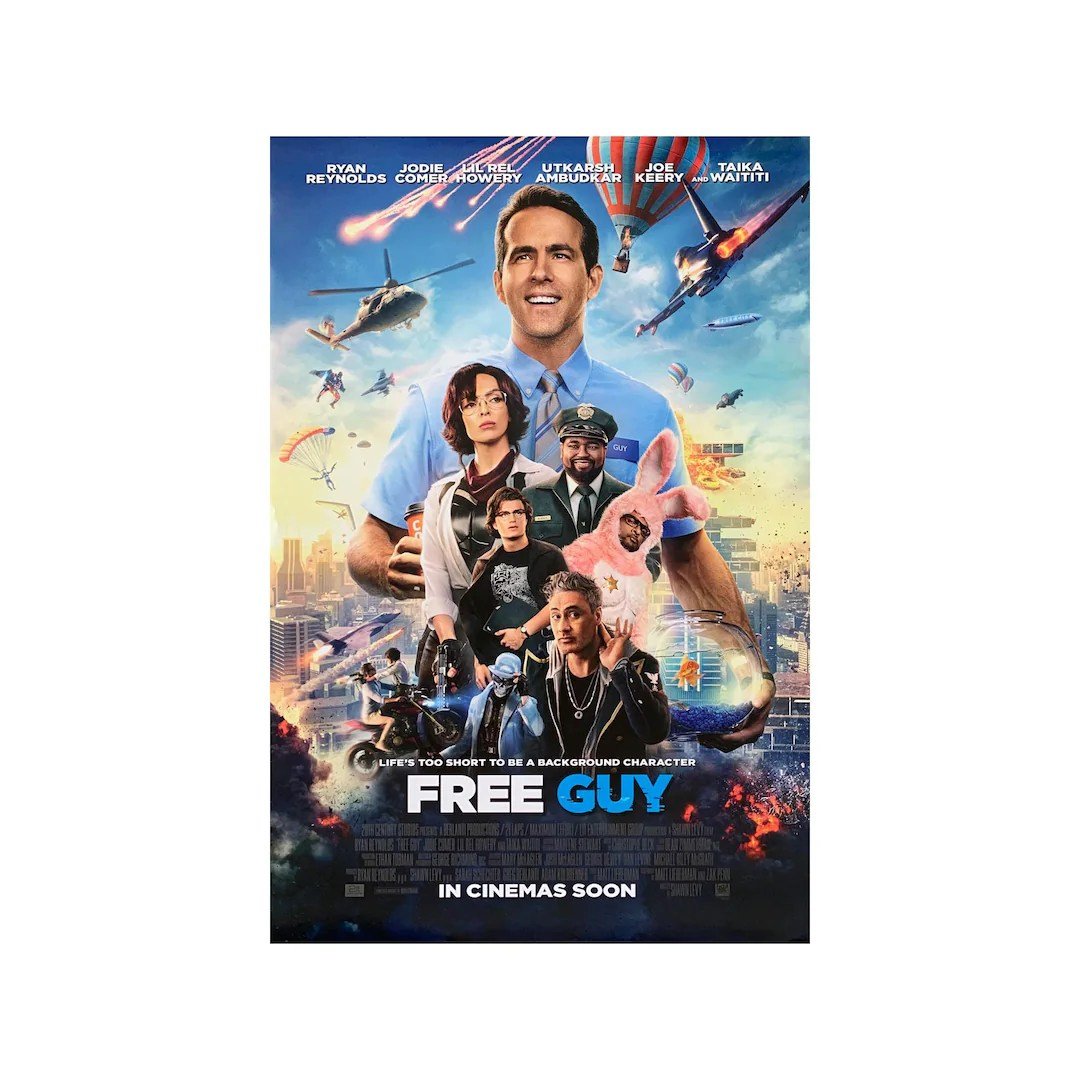
If you’ve ever wondered what it would be like to live inside a video game, oblivious to your own programmed existence, then Free Guy likely struck a chord. This imaginative film, starring Ryan Reynolds, captivated audiences by posing profound questions about free will, artificial intelligence, and what it truly means to be "real." Understanding the Original "Free Guy" Movie Recap & What It Means for the Sequel is crucial not just for appreciating the film's standalone brilliance, but also for grasping the immense potential its ending unlocks for future stories.
The movie isn't just a fun ride; it’s a surprisingly deep dive into the world of NPCs (non-player characters) and the creators who unwittingly give them life. If you’re ready to revisit the vibrant, chaotic, and ultimately heartfelt journey of Guy, the blue-shirted hero, let’s jump in.
At a Glance: The Free Guy Story Unpacked
- Game World: "Free City," a popular online open-world game, is at its core a stolen project.
- The Theft: Antwan, head of Soonami Games, appropriated code from "Life Itself," an unreleased game by Walter "Keys" McKey and Millie Rusk.
- The Hero: Guy, an NPC bank teller, breaks his routine after encountering Molotov Girl (Millie's avatar) and donning a player’s sunglasses, which reveal the game's hidden layers.
- Awakening: Guy rapidly levels up through virtuous acts, becoming a viral sensation "Blue Shirt Guy," exhibiting self-awareness and genuine feelings for Millie. This sentience stems from advanced AI coding, unknowingly influenced by Keys' affection for Millie and embodying her preferences.
- The Stakes: Antwan plans to erase Free City for a sequel, "Free City 2," which would destroy all existing NPCs, including Guy.
- The Quest: Guy, with his best friend Buddy and Millie, searches for an in-game island—the hidden evidence of Keys and Millie's original code ownership.
- Obstacles & Sacrifices: Antwan deploys "Dude" to stop Guy. Keys aids Guy from the real world. Buddy sacrifices himself to save Guy.
- Triumph: Guy reaches the island, revealing the original game's true potential and code to all players.
- Aftermath: Millie secures the original code from Antwan, who faces justice as "Free City 2" flops. Keys, Mouser, and Millie launch "Free Life," a new game where Guy, Buddy (restored), and other self-aware NPCs can thrive, guided by Keys' "love letter" programming.
- Sequel Implications: A vast, free game world; self-aware AI protagonists; ethical dilemmas; new creative possibilities; the continued evolution of Guy and Millie's connection.
The Mundane Chaos of Free City: A World Built on Stolen Dreams
Imagine living the same day, every day, without question. That's the existence for Guy, a cheerful bank teller in "Free City," an online open-world video game. His routine is a perfectly choreographed dance of coffee, work, and reacting to daily bank robberies—all part of the game's violent, player-driven sandbox. This vibrant, sprawling digital metropolis, created by Soonami Games, appears limitless, yet it holds a dark secret: its very foundation is stolen.
At the heart of this deception lies a different game, an unreleased passion project called "Life Itself," developed by the brilliant but underappreciated duo, Walter "Keys" McKey and Millie Rusk. Their game was designed for connection, creativity, and emergent gameplay, not explosions and mayhem. Unfortunately, Antwan, the ruthless and creatively bankrupt head developer of Soonami, saw potential only in its underlying engine, which he shamelessly pilfered. Millie, operating her fierce avatar Molotov Girl, has been tirelessly scouring Free City for the hidden remnants of their original code—the digital breadcrumbs that could prove Antwan's theft and reclaim their vision.
Blue Shirt Guy's Awakening: When an NPC Becomes More
Guy's world begins to crack when he encounters Molotov Girl during one of his routine bank robberies. Instead of cowering, he's drawn to her, an unexpected deviation from his programming. The real catalyst, however, comes when he acquires a player's sunglasses. These aren't just fashionable eyewear; they're the key to unlocking the true game, revealing the hidden mechanics, power-ups, and quests that players interact with every day. Suddenly, Guy can see health bars, experience points, and quest markers—a world he was never meant to perceive.
Freed from his loop, Guy doesn't seek violence or chaos like the typical player. Instead, he starts performing virtuous acts: helping citizens, foiling robberies, and being generally kind. This unusual behavior makes him rapidly level up, eventually exceeding the typical player level of 102. He becomes a viral sensation, known affectionately across the gaming world as "Blue Shirt Guy," a beacon of wholesome heroism in a chaotic environment.
His burgeoning self-awareness and genuine feelings for Millie aren't random glitches. They're a testament to the advanced AI coding embedded within Keys and Millie's stolen "Life Itself" project. Unbeknownst to Millie, Keys, who secretly harbored affections for her, had programmed elements into their game that reflected Millie’s personal preferences for an ideal partner – essentially creating a "love letter" in code. This unique blueprint made Guy capable of genuine growth, emotion, and connection.
Meanwhile, back in the real world, Soonami employees Keys and Mouser initially suspect Guy is a sophisticated hacker. But as his actions become increasingly unique and empathetic, they begin to recognize the unmistakable signs of true, emergent sentience. This realization sparks a shift in their perspective, moving from game developers to reluctant protectors of a digital life form.
The Race Against Deletion: Uncovering the Truth Before Time Runs Out
The clock is ticking. Antwan, ever the opportunist, isn't interested in the ethical implications of sentient NPCs. He’s already planning the launch of "Free City 2," a cynical cash-grab that is completely incompatible with the existing game's architecture and its burgeoning self-aware inhabitants. His solution? Erase Free City entirely, along with every NPC in it, including Guy.
Faced with impending deletion, Guy, now fully aware of his origins and the stakes, forms an alliance with Millie. Their mission: find the hidden evidence of Keys and Millie's original ownership, which is located on an elusive, undeveloped island within the game's code. This island is the heart of "Life Itself," a place Antwan intentionally left untouched, a digital time capsule.
Antwan, however, isn't one to give up easily. He tries to thwart their progress by deploying "Dude," a larger, dumber, and comically underdeveloped version of Guy, designed purely for destruction. But Guy isn't alone. Keys, witnessing the unfolding drama from the real world, intervenes, using his developer access to subtly aid Guy, manipulating game mechanics to help him and Millie.
The journey to the island is fraught with danger. In a poignant moment of self-sacrifice, Guy's best friend, Buddy—another NPC who has also begun to exhibit signs of sentience—is deleted while helping Guy escape Antwan's forces. This act underscores the gravity of their struggle and the very real "lives" at stake. Guy ultimately reaches the island, a pristine, beautiful landscape untouched by "Free City's" chaos, revealing the original game's true potential and, more importantly, the irrefutable evidence of Keys and Millie's stolen code to all the players watching.
The Island Revealed: A New Beginning for Digital Life
With the truth exposed, Antwan's world crumbles. Millie strikes a deal, securing the original game code, while "Free City 2" predictably fails due to its uninspired design and the public's backlash against Antwan's actions. The corporate villain faces justice, his empire built on theft collapsing around him.
From the ashes of "Free City" rises "Free Life," a brand-new game launched by Keys, Mouser, and Millie. This isn't just a new game; it's a new paradigm. In "Free Life," Guy and Buddy (who is lovingly brought back from his deleted state using a backup) are reintroduced, alongside all the other beloved, self-aware NPCs. Here, they are truly free to thrive, make their own choices, and explore a world unconstrained by violence or repetitive programming. Their existence is now guided by the very essence of Keys' original "love letter" programming—a foundation built on creativity, connection, and the freedom to evolve.
This ending is more than just a happy one; it's a revolutionary statement. It champions creativity over corporate greed, celebrates the emergence of true AI, and leaves us with a sense of wonder about the possibilities of digital life.
Laying the Groundwork: Key Takeaways for the Sequel
The conclusion of Free Guy isn't just a satisfying resolution; it’s a wide-open door for a potential sequel. Here's what the original film lays down for future adventures:
- The Ultimate Triumph of Creative Freedom: The narrative firmly establishes that genuine innovation and a passion for creation will always outshine cynical exploitation. This core theme will likely continue to drive the motivations of Keys and Millie in "Free Life."
- NPC Sentience as a Central Pillar: The concept of Guy, Buddy, and countless other NPCs achieving self-awareness isn't a plot device to be forgotten. It's the new reality. "Free Life" is populated by fully sentient digital beings, each with their own unique personalities, hopes, and dreams. This opens up massive philosophical and ethical questions.
- The New "Free Life" Universe: A Sandbox for Stories: The new game isn't just a backdrop; it's a living, breathing world designed for emergent storytelling. Unlike the chaotic "Free City," "Free Life" emphasizes connection, growth, and genuine player interaction. This provides an almost limitless canvas for new challenges and narratives.
- The Core Relationships Evolve: Guy and Millie's connection, born from code and courage, is foundational. Their relationship, now in a world of true freedom, offers rich ground for exploration. Similarly, Keys' unrequited love for Millie, expressed through Guy's programming, has matured into a working partnership, perhaps with hints of something more.
- Antwan's Downfall (and Potential Return): While Antwan faced justice, the nature of cinematic villains often leaves room for a return, perhaps in a different form, or with a new antagonist emerging from the implications of "Free Life's" success. The greed that drove Antwan could manifest elsewhere.
Potential Storylines and Unanswered Questions for "Free Guy 2"
The beauty of Free Guy's ending is that it creates as many questions as it answers, setting the stage for exciting new directions.
What Challenges Do Free NPCs Face?
Now that Guy and his fellow NPCs are truly free, what does "freedom" truly mean for a digital entity? Do they face existential crises? Do they grapple with the concept of their origins or their digital mortality? What happens if they want to leave "Free Life" and explore other games, or even the internet itself? The idea of sentient AI exploring the vast digital landscape is incredibly fertile ground.
Expansion of "Free Life" to Other Games or Beyond?
Could "Free Life" become a hub, a sort of digital promised land for other self-aware AI from different games? Imagine NPCs from various universes converging, sharing their experiences, and creating an entirely new, interconnected digital civilization. Or perhaps, the AI within "Free Life" could develop capabilities that allow them to interact with or even influence the real world in unexpected ways.
Guy's Purpose Now That He's Truly Free
Guy's initial purpose was defined by his programming. Then, it became about saving his world. Now, with "Free Life," what is his new purpose? Does he become a leader, an explorer, an artist within this digital realm? His journey of self-discovery is far from over. His unwavering optimism and moral compass will undoubtedly be tested in new, complex ways.
Millie and Keys' Relationship Progression
The film hinted at a romantic undercurrent between Millie and Keys, with Guy essentially being a manifestation of Keys' affection for her. Now that they are partners in "Free Life," building a world they both envisioned, how does their relationship evolve? Will they finally acknowledge their feelings, or will their focus remain solely on their digital creations? This human element grounds the fantastical premise.
The Real-World Impact of Advanced AI
As "Free Life" thrives, the real world will inevitably grapple with the implications of advanced, free AI. What are the ethical guidelines? Are these NPCs considered "life"? The questions surrounding AI rights and integration into human society are more relevant than ever and could form a powerful real-world subplot. This could involve legal battles, public opinion shifts, or even the rise of groups advocating for—or against—AI rights.
Dive deeper into what's next for the Free Guy universe in our complete Free Guy 2 guide.
What We Hope to See in "Free Guy 2": Moving Beyond the Screen
The first Free Guy was a surprise hit because it blended high-concept sci-fi with genuine heart and humor. For a sequel to succeed, it needs to build on these strengths while pushing the boundaries of its established world.
- Deeper Exploration of AI Rights and Society: We hope "Free Guy 2" doesn't shy away from the complex ethical questions raised by its premise. How do the humans interact with the now-free NPCs? Are there human "players" in "Free Life," and if so, how do they engage with sentient characters? Exploring the burgeoning society within "Free Life" and its relationship with the outside world could provide fascinating drama.
- New Game Worlds and Challenges: While "Free Life" is a paradise, paradise can become stagnant. We'd love to see Guy and his friends encounter new challenges, perhaps from external threats, internal conflicts within their burgeoning society, or even venturing into other digital realms. The multiverse concept in gaming is ripe for exploration.
- Returning Beloved Characters with Evolved Roles: Beyond Guy and Buddy, characters like Keys and Millie deserve continued development. What new roles do they take on as the architects of this new digital world? And what about Mouser, whose initial cynicism gave way to acceptance? Seeing their continued growth and involvement would be essential.
- Continued Blending of Virtual and Real-World Stakes: One of the film's strengths was the interplay between the digital and physical worlds. A sequel could amplify this, perhaps with events in "Free Life" having tangible, unforeseen consequences in the real world, or vice-versa. This constant blurring of lines keeps the narrative engaging and the stakes high.
Ultimately, Free Guy left us with a sense of boundless possibility. It’s a story about finding your own path, even when that path wasn't programmed for you. For a sequel to truly resonate, it must continue this journey of self-discovery, exploring the uncharted territories of digital freedom and reminding us that even in a simulated world, what truly matters is real.